.png "pattylulogo 2026 (2)")
.png "pattylulogo 2026 (2)")
There are cities that you visit.
And then there are cities that you cross slowly, as if they were made of invisible layers, able to tell more than they show.
Cairo is one of these.
It is not just chaos, traffic, dust, and monumental history.
It is a place where time does not flow in a straight line, but accumulates. Where every step takes you back thousands of years and at the same time into something extremely human.
“During this journey I had the feeling that Cairo was not a destination, but a continuous dialogue between eternity and fragility.”
The laboratory of eternity: from Saqqara to Giza
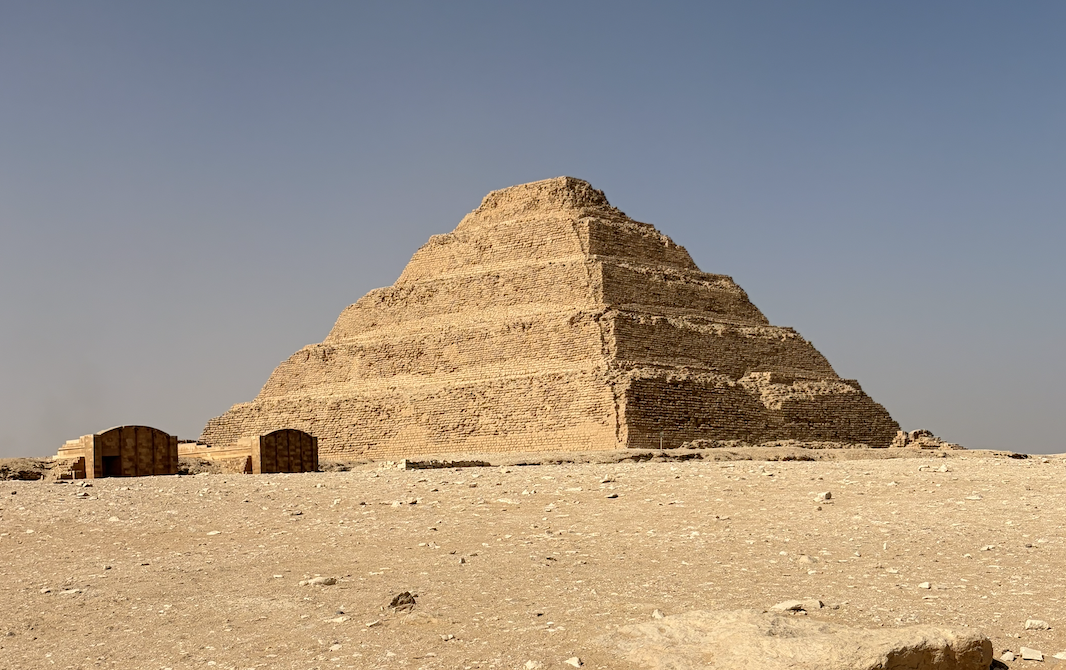
In Saqqara, you do not perceive perfection. You perceive the attempt.
The Step Pyramid of Djoser is not just a tomb: it is an idea taking shape, an architectural thought learning to become eternal. The lines are still experimental, the proportions seek balance, the surrounding desert amplifies the sensation of being in a place of trials and insights.
Saqqara is the moment when man decided to challenge time — without yet knowing how to do it.
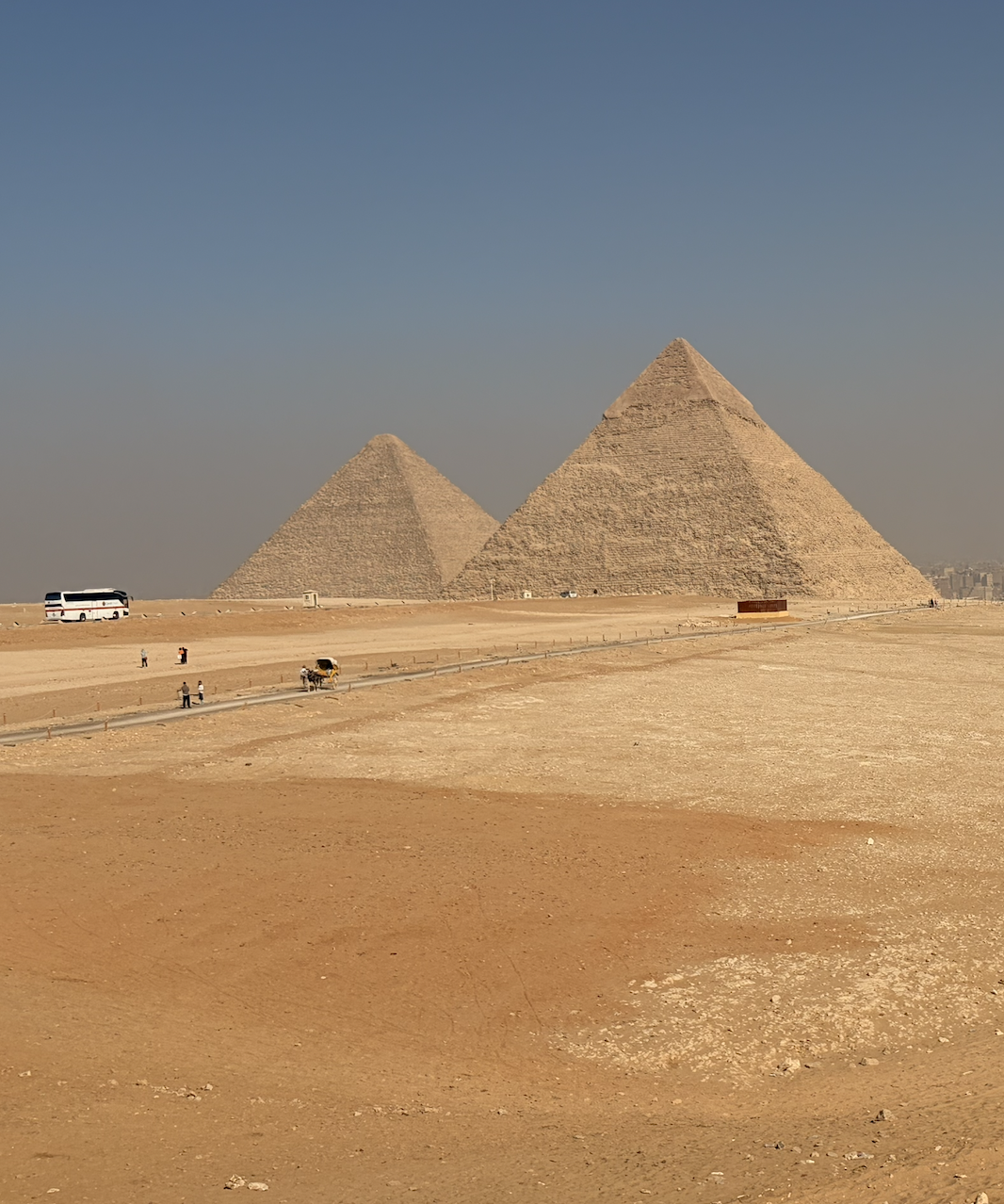
Then comes Giza.
And everything changes.
The precision of the pyramids seems almost unreal, as if human determination had suddenly found the formula for eternity. The transition from Saqqara to Giza is not just geographical: it is the story of an obsession that perfects itself, of a vision that becomes certainty.
It is impossible not to perceive the leap.
From attempt to perfection.
From search to declaration. And in the background, an infinite city.
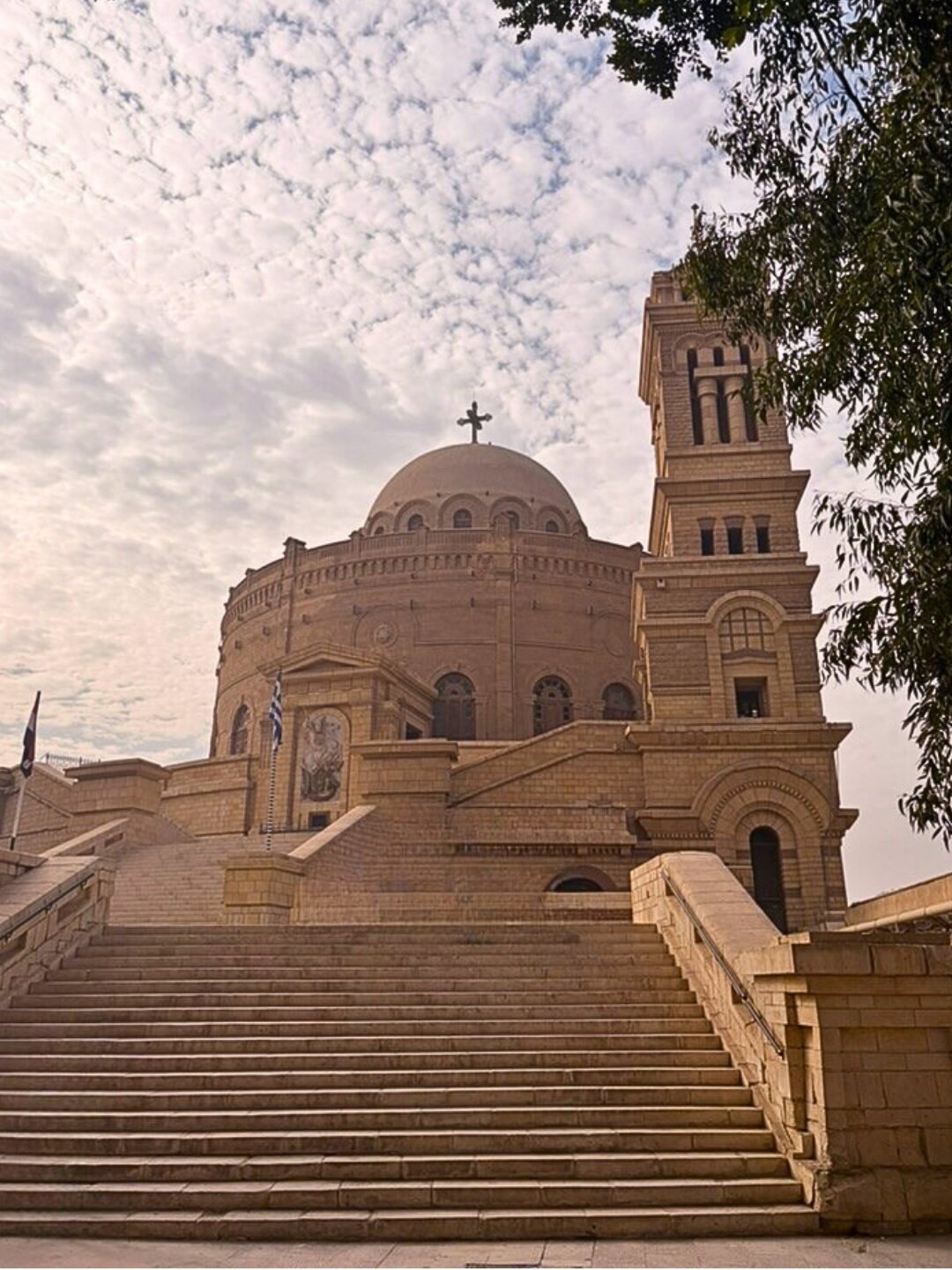
Below street level:
Cairo refuge
You don't understand Cairo just by looking up. Sometimes you have to go down. In the Coptic quarter you get the physical sensation of entering another dimension. The streets sink, the noises fade, the light changes. Some churches rise above ancient caves and Roman remains, creating an intertwining of eras that seems to protect those who enter.
In the church of Abu Serga, built above the cave where tradition says the Holy Family took refuge, the silence has a different consistency. It is cool, enveloping, almost suspended.
Outside, the metropolis continues to vibrate.
Inside, time seems to protect.
Cairo, in that moment, stops being a noisy city and becomes a place of refuge — spiritual, historical, human.
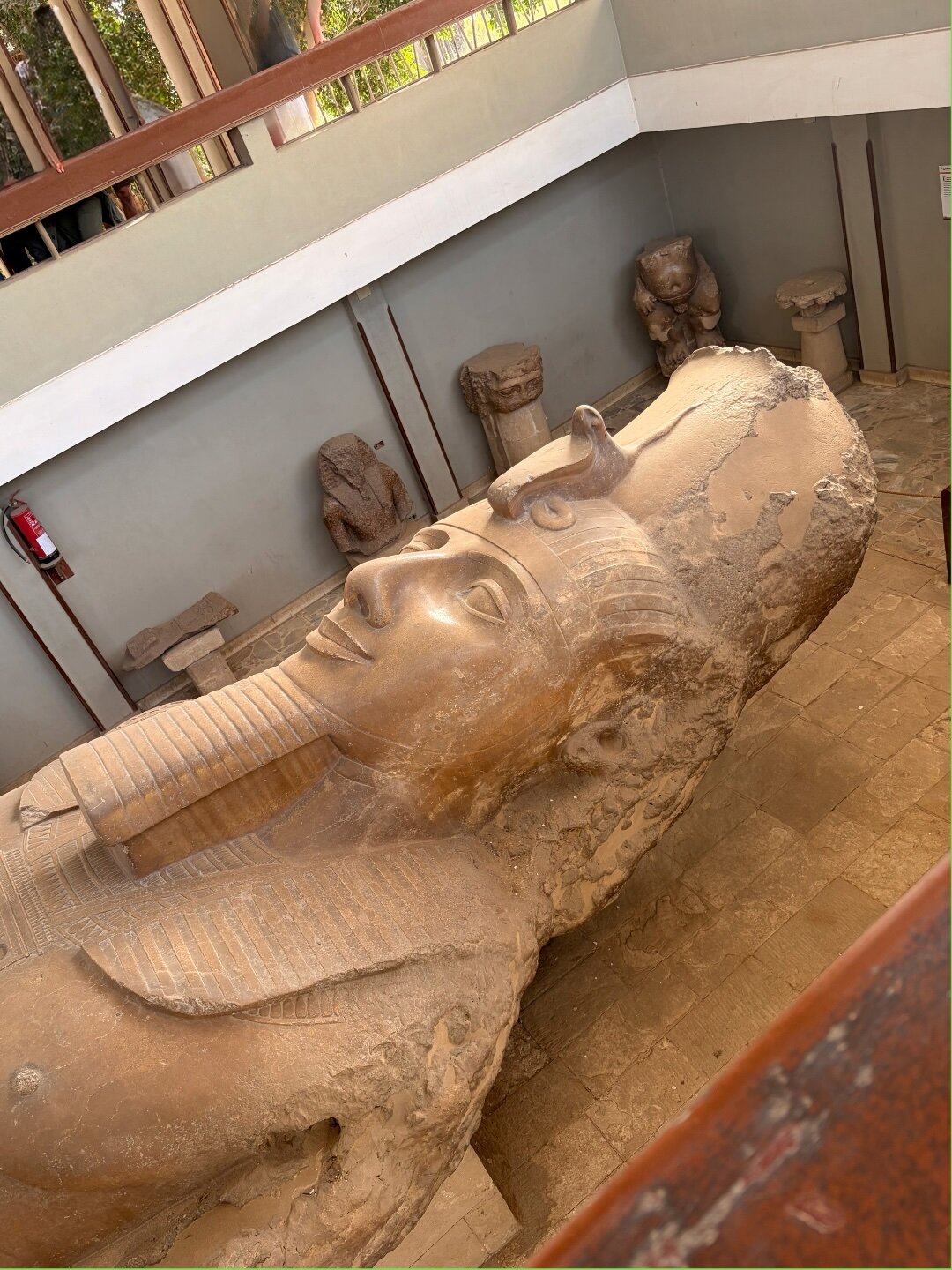
Memphis: the ghost capital
Memphis is difficult to describe precisely because it doesn't impress in the way you might expect. There are no monumental skylines or spectacular scenery. There are fragments. Broken statues. Silences.
And yet Memphis was one of the most powerful capitals of the ancient world. A political, religious, and cultural center that influenced entire civilizations. Today it is a quiet garden where the colossal reclining statue of Ramses II rests in an almost discreet museum. It no longer dominates. It doesn't impose. It exists. And perhaps this is its strongest message.
Power is fragile.
Time puts everything into perspective.
Memphis is not absence.
It is memory transformed into stillness.
.jpeg "ig-post-(3).jpeg")
The sense of scale:
from the colossus to the grain of sand
Cairo constantly forces you to recalibrate your perception of yourself.
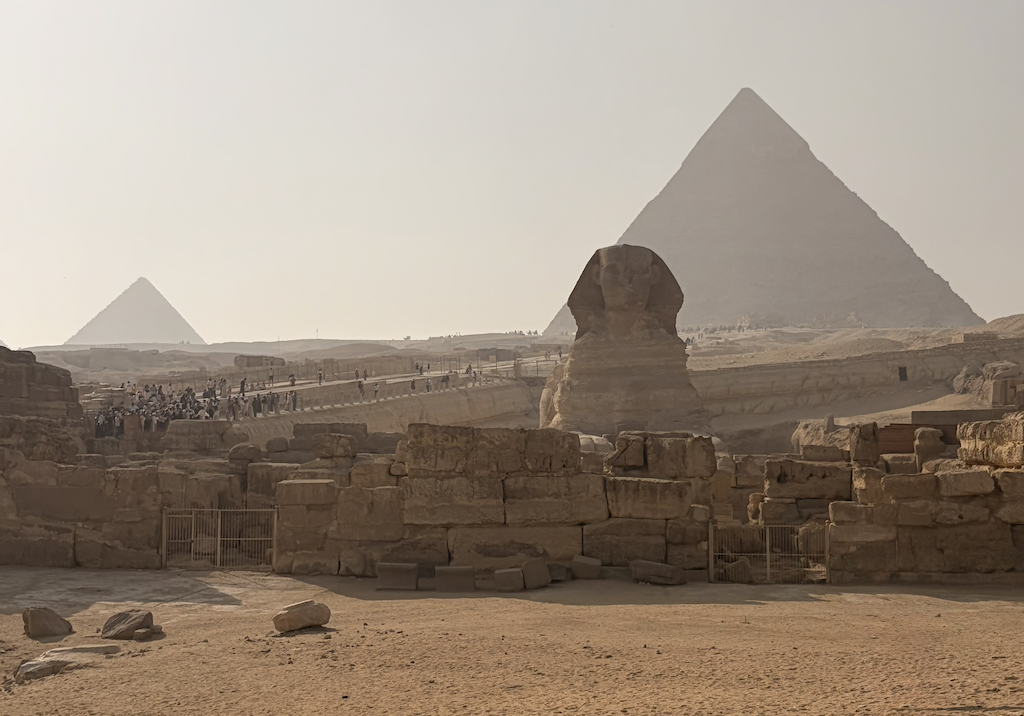
In front of the Sphinx you feel tiny.
In the desert of Saqqara you perceive space as infinite. Among the hieroglyphs or the Coptic icons, instead, your gaze draws closer and becomes intimate, almost homely. It is a constant alternation between immensity and detail. History crushes you and then, suddenly, welcomes you. The desert makes you small, but the human warmth of the ancient neighborhoods gives you back a sense of belonging. Perhaps this is precisely the charm of Cairo: it never allows you to remain a spectator.
.jpeg "ig-post-(4).jpeg")
GEM:
when eternity meets the present
The new Grand Egyptian Museum is not just a museum. It is the point where the past stops being distant and becomes accessible.
After crossing deserts, ruins, and ancient neighborhoods, arriving at the GEM gives the sensation of seeing history take on a new form: brighter, more readable, closer. It does not replace the emotion of archaeological sites.
It completes it.
It is the place where eternity finds a new voice, able to speak even to the contemporary traveler.
Why Cairo truly surprises
Compared to millennia of history, Cairo is not an “easy” city to understand. But it is a city that leaves deep marks.
It surprises because it is not just a journey into history, but into the perception of time, spirituality, human fragility, and the extraordinary ability of humans to create something that outlives themselves.
And perhaps this is exactly what remains above all:
the feeling that eternity is not a distant place, but something we have always tried to build.
.jpeg "ig-post-(5).jpeg")
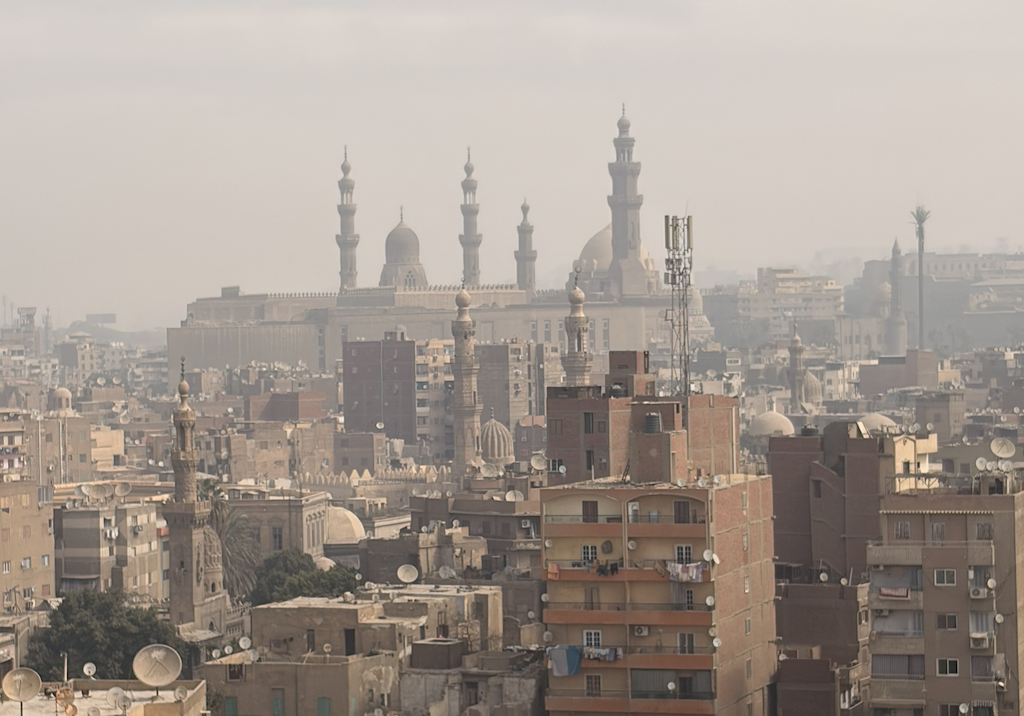
Cairo is a lively, intense city, at times overwhelming, where the present flows with the same strength as the past that surrounds it and its Nile. Among horns, voices, improvised markets and the scent of warm bread, daily life continues to move alongside millennia-old temples and mosques. Life does not stop for history — it crosses it, absorbs it, makes it part of normality. It surprises precisely because of this effortless coexistence: the sacred and the everyday, chaos and calm, human fragility and the stubborn search for something that lasts. And perhaps this is its most authentic secret.
Not being a perfect city, but a profoundly true one, capable of tiring, fascinating, disorienting and, slowly, letting itself be understood.
Because Cairo cannot be conquered in a day. Will I return? Certainly, as I have already done many times in the past.
Thank you
PattyLu Travel